NEW DIRECTIONS FOR 2021
AT TAOS SCHOOL OF METALSMITHING
MARILYNN NICHOLSON AND TAOS SCHOOL OF METALSMITHIG ARE NOT ACCEPTING STUDENTS UNTIL FURTHER NOTICE. WEARING MASKS
AND THE DANGER OF THE PANDEMIC MAKE IT IMPOSSIBLE TO TEACH AT CLOSE QUARTERS. MARILYNN PLANS TO WORK ON HER OWN
JEWELRY AND CATCH UP ON OTHER PROJECTS THAT HAVE BEEN IGNORED FOR YEARS. NO FURTHER WORKSHOPS OR INDIVIDUAL STUDY
CLASSES WILL BE SCHEDULED ANY TIME SOON. ANY FUTURE NEWS WILL BE POSTED ON THE WEB SITE IF THERE IS A CHANGE. THANKS
FOR YOUR INTEREST. STAY WELL AND BUSY.
MARILYNN NICHOLSON
COURSE DESCRIPTIONS FOR 2020
Taught By
Marilynn Nicholson
General Information about Workshops
Registration and Enrollment
Workshops can be scheduled for one student alone or two students who are at the same skill level. Questions and discussions about available dates can be arranged by phone or e–mail. Once a decision is made about dates it is important to pay a deposit of half the tuition to reserve the chosen dates. If there are questions about workshop costs please phone or write. The balance for the remaining tuition is due one month before the workshop starts.
It is important to complete a registration form and sign and return it. The registration form is a contract. It establishes that the school and student promise to reserve the scheduled time so everyone realizes those dated are set and can not be changed without permission from the other party. Students book things like housing and transportation that may not be altered without loss of funds. The contract guarantees that the instructor will reserve those dates and also cannot cancel. Students must understand that other potential students may have been turned away and not able to take the course. Everyone must understand cancelling is not a casual thing that can happen at the last minute.
In the case of personal emergencies, students can cancel up to 30 days before the workshop dates. A refund of the amount paid minus a $35 registration fee will be returned. Workshops cancelled within the 30 day period before the course date may be rescheduled at the discretion of the instructor. In the case of last minute cancellations where other students have been turned away from assigned dates there will not be a refund or rescheduled workshop. Once the workshop starts there is no refund.
Workshop Time
Classes start at 9:00am and end at 4:30pm. Field trips to galleries, museums, and suppliers may also take place at lunch time or at the end of the day. A minimum of 6½ hours is spent in the studio working. It is important to arrive promptly and focus on learning information and completing projects. Time may be extended if needed but working in the studio for long periods of time after class every day is discouraged. Free time after class can be spent exploring interesting places near–by and working on designs. In order to see places like Taos Pueblo and special events, class times may be rearranged. Discussion about lunch time options and other class issues will be discussed at the beginning of each course.
Tools and Materials
All tools and materials needed for the class will be made available for student use. Supplies including metals for projects will be provided as part of the materials fee. Because of the increase in the cost of silver there may be an additional charge if projects are large and exceed the allowed amount. Students will be informed before they start on projects if the cost is higher. No gold or gold solder will be supplied. Stones used in projects will not be supplied. Taos has venders with a selection of wonderful options.
Availability for scheduling Lapidary classes will be limited in the future. Students must schedule stone cutting workshops directly with the instructor and plan what will be covered in the class. Because of the large cost involved in teaching lapidary, an additional fee may be charged for heavy use of expensive equipment. Smaller stones may be slabbed and polished but students will not be allowed to slab and prepare large stones for later use. Local gem and rock shops have a limited selection of rough rock so students may want to bring things they already own. A selection of stones will be available but, if certain stones and colors are needed, students should be prepared to search for stones that interest them before they arrive. The instructor’s private collection is not for sale unless indicated. Classes are conducted in the instructors private home and studio and therefore privacy should be respected at all times. Politely ask before you use extra materials, look in drawers, or help yourself to materials.
NOTE!
Students should ask questions about their choice of courses to be sure they will be working at an appropriate level. Do not decide to take an advanced course if you do not know basic fabrication techniques and how to silver solder. Students who string beads or make precious metal clay jewelry may not have the skills needed even though they already make jewelry. Carefully discuss what you want to make and choose an appropriate course for your particular skill level.
RECENT WORKSHOP DESCRIPTIONS
Introduction to Jewelry Design
A workshop emphasizing an in–depth study learning the basics of designing and fabricating jewelry in a supportive atmosphere. Students become familiar with all of the essential techniques, including sawing, cutting, filing, stamping, texturing, roller embossing, forming, finishing & polishing, riveting, and cold connections, as well as an opportunity to work with wire, fusing, soldering, stone setting, patinas, and other coloring methods. The first two and a half days are spent watching demonstrations and trying each technique while making a variety of samples. The last two and a half days are dedicated to applying that knowledge of design and technique by making things. It is necessary for each student to experience taking a concept and then follow through by making finished pieces.
Intermediate Jewelry Design
This workshop is suitable for students who want to acquire more advanced technical knowledge … It concentrates on adding more texture, depth, and volume to jewelry designs by further exploring techniques, such as reticulation, gold overlay, embossing, corrugating, fold forming, texturing and construction of complex pieces of jewelry using more advanced soldering and stone setting techniques. Talks on design and an introduction to construction of simple mechanisms will be included. Coordinating a thoughtful construction approach with a choice of conscious design elements will be emphasized. The first half of the course focuses on understanding and learning skills. The second half is devoted to using those skills to make finished pieces of jewelry.
Stone Setting, Soldering and Basic Lapidary
A workshop for intermediate to advanced students who feel a need to improve their soldering, learn more about stone setting, and are interested in adding lapidary skills. Basic knowledge of stone cutting and polishing allows students to create more unique designs with stones, beads and found objects. Developing better soldering methods, making settings for special stones and learning how to problem solve when things don't fit will help students to think consciously while developing and constructing individually inspired designs. This course is filled with bench tricks and methods to stimulate your imagination!
Unusual Stone Setting Techniques
If you are tired of ordinary shaped stones and bezels, you will have an opportunity to learn to set stones in interesting new ways. The course includes instruction in setting irregular–shaped gems, setting stones from the back, modifying channel settings, how to hold a stone in partial settings, tension settings, riveting stones, use of cold connections and more. Classes will feature demonstrations of many techniques and an opportunity to explore new ways of looking at the problem of how to trap a stone. Students are encouraged to bring stones and found objects that seem difficult to set with them. Don't worry if you don't already own stones. Local suppliers will offer a variety of things to tempt you. This workshop combines learning new methods with making one or several pieces of jewelry using newly acquired skills.
Ring Design
You will learn many approaches to designing and fabricating rings, including band, u–shaped, t–shaped, hollow, rings with moving parts, hinged, expandable, fused, h–shaped rings and many more … Students will also learn about tension settings, cutouts, and rings with elements that move in a variety of ways. Challenges involving different sizing methods for each type of ring will be reviewed. Each day a different type of ring or group of rings will be featured and hopefully finished that day so students can concentrate on the next shape the following day. Students will go home with five or more different types of finished rings.
Earring Design
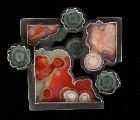
Imagine taking a whole week to concentrate on all the exciting possibilities and challenges presented by designing unique earrings. Each day we will focus on different techniques of forming, linking and making mechanisms on matched and unmatched pairs of earrings that catch the light, shimmer and move. Are they too big? Too heavy? Facing the wrong way? Questions that need to be answered. Soldering many small pieces used to construct 3–dimensional shapes and ways to protect tiny moving parts so they stay mobile is sometimes a trick. Creating hollow forms, balance, weight, and comfort all come into play. Earrings are the #1 best–selling pieces of jewelry. Take advantage of the opportunity to design production line pieces or concentrate on special “one of a kind ideas!
Introduction to Jewelry Design Made Easy
A course featuring a different approach to teaching an introduction to jewelry design to students who want to experience making jewelry to see if they like it. This course offers an opportunity to try a series of diverse projects with step by step instructions. The first day is spent learning basic techniques while gaining familiarity with the layout of the studio and its equipment. The following days feature day–long projects in silver, including a stamped bracelet, roller–embossed earrings, a pendant designed with a specially constructed bail and a fused or textured ring. Guidelines will be given on possible projects but students will be encouraged to make their designs reflect their own taste by injecting their personal style into each project. An option to set stones on each piece of jewelry will be available. Learning the skills of soldering and practicing a variety of construction techniques is emphasized. Students will take home four finished pieces of jewelry!
Belt Buckles, Bolos and Bracelets for Men and Women
Designing for men is an area often ignored and this course will give students an opportunity to construct and design pieces with men in mind. For those attending the course and interested in making similar pieces for women, differences in construction will be covered. Jewelry for men usually has a rugged strong approach using heaver metal and making a bold direct statement. Men find practical designs that can be worn every day and for any occasion most appealing. Belt buckles, bolos and bracelets use especially designed catches and mechanisms reviewed in demonstrations. Sequence in the way larger pieces are made is essential to successful construction. Comfort is the key word. in design.
Jump Start Your Creativity
Have you learned metalsmithing techniques years ago and find you want a good review to start making jewelry again? If you are already making jewelry and feel your ideas are stale or maybe you have realized your techniques are dated this may also be for you. Come and play with new things and Jump Start Your Creativity!
Making jewelry and trying to develop new design ideas over a long period of time often seems like hard work and of course it is work! Allowing yourself to experiment with a new approach can be fun and life changing. You will make jewelry and explore thought processes you may not have considered before. This will be done with silver and traditional materials and will not just be a conceptual exercise. Come work with me and start out with techniques like direct poured cast textures, hammered and formed shapes and using heat induced surfaces and shapes to relax into a new form of expression. Explore use of photographing and photocopying elements of your designs to record and experiment with extending an idea. The resulting design ideas will amaze you!

Necklace, Pendant and Locket Design
Emphasis on a focused examination of ways to construct necklaces, including information on setting unusual shaped stones, hinging and mechanisms will inspire ideas. Lockets evoke additional mystery and romance because they are hollow construction and may contain a message, sacred objects, or secret meaning. Handmade catches, chains, and linking devices contribute special meaning to the wearer. The course promises more ideas than you can possibly make in a week! A total design approach will be used to make simple and complex necklaces, emphasizing communication of design concepts, methods of making jewelry more dimensional and giving elements movement and individuality.
Designing Bracelets
Take time out of your busy schedule to explore creative solutions for making cuff, linked, and hinged bracelets. Add especially made catches and mechanisms that compliment your designs. Use of stamping, roller embossing, fusing, reticulation, anticlastic raising, forging, stone setting or simple inlay, and a variety of other fabrication techniques will all work separately or in combination. The current trend is stacking groups of different textures and widths. Add color by including stones and patinas. Tips will be given for efficiently soldering hinges and making box catches that work and are easy to construct. Examples of other catches and mechanisms will be demonstrated to add style and individualism to your designs.
Designing Catches and Mechanisms
Upgrade the designs of your jewelry by adding findings specifically made for a particular piece. Commercial catches have not changed for decades and often are not the right size and do not compliment contemporary designs. The workshop focuses on making samples that can be modified later and used in pieces of jewelry you make in the future No matter how experienced you are you will improve your soldering methods by making a variety of catches. Information relevant to making tiny elements that move and soldering pieces in close proximity will be shared. A collection of historic examples and contemporary designs will stimulate your imagination. Bench tips and detailed descriptions of the sequence of building both simple and complex mechanisms will be explored.
The Total Approach in Design and Construction — Individual Study
If you have wanted a chance to examine your jewelry in reference to all aspects of design, technique and marketing your work, this course will give you that opportunity. It is a workshop that combines knowledge from some of the other classes, and is set up to encourage jewelers to think about the total picture. What are you trying to say in making jewelry and is it working? Decision making and designing jewelry takes mental awareness and knowledge of how everything relates. It takes time to figure out improvements and implement new ideas. The course is suitable for jewelers with experience who don't want to get involved with a full mechanism, lapidary, or stone setting workshop but would like to try to add refinement to design and construction in those areas of their work. Students will be exposed to new ways of thinking and get to experiment in a supportive atmosphere.
Future Courses
Please check back to learn about future courses. If you have a specific time frame or technique that you want to learn, consider taking an individual study course or arranging a specially scheduled workshop for you and your friends.